
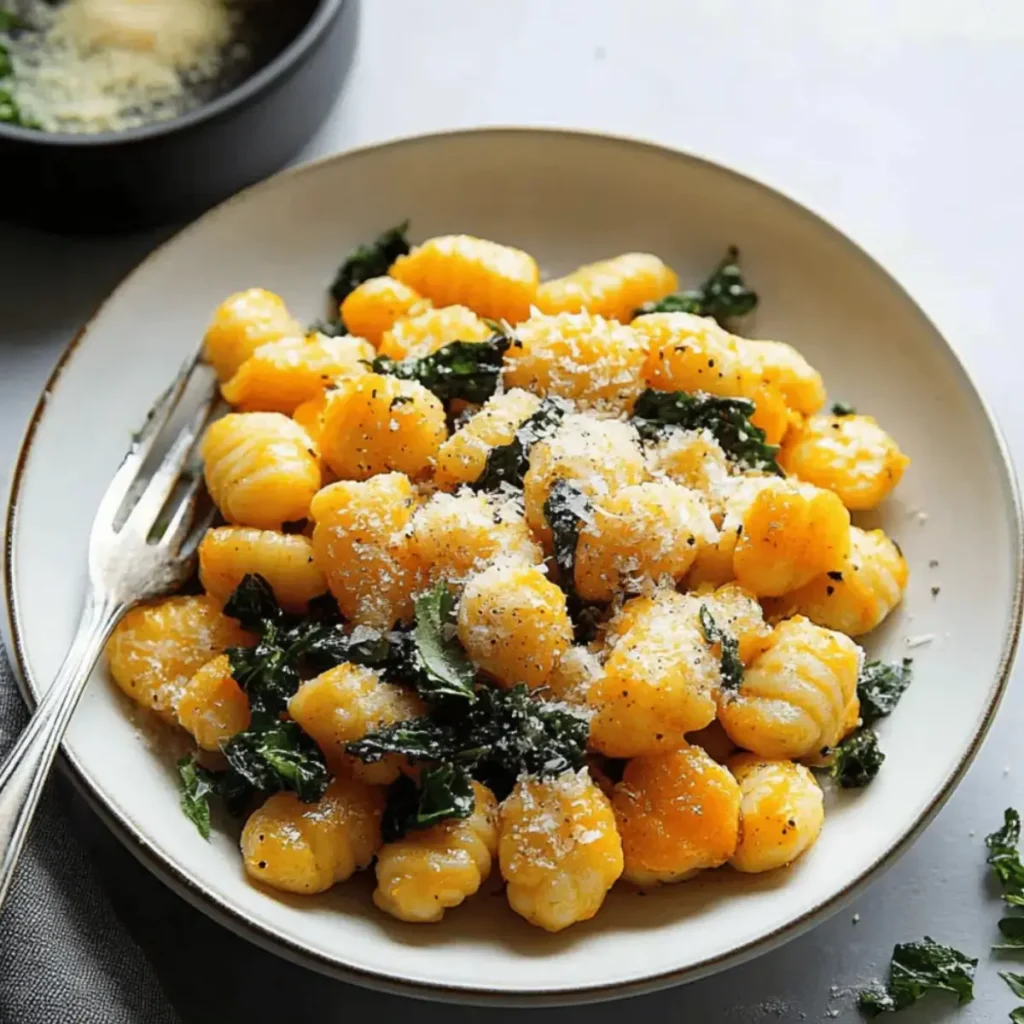
BEST Butternut Squash Gnocchi with Roasted Garlic and Kale There’s something almost magical about the moment when gnocchi hits a hot pan with butter. That sizzle, the way the little potato pillows transform into golden-brown clouds with crispy edges—it’s the kind of kitchen alchemy that makes you feel like you’ve unlocked a secret. The first time I pan-fried gnocchi instead of boiling them, I genuinely wondered why anyone does it any other way.
This recipe happened by accident one October evening when I had half a butternut squash rolling around in my crisper drawer and a package of gnocchi I’d been meaning to use for a week. What started as “let’s see what happens” turned into something I now make at least twice a month, usually when I need to convince myself that cooking for one is worth the effort. Or when I want to impress someone without actually admitting I’m trying to impress them.
The beauty of this dish is how it manages to feel both rustic and elegant at the same time. It’s the kind of meal that works just as well on a random Tuesday when you’re eating in sweatpants as it does when you’re trying to prove to your friends that yes, you can cook, thank you very much. I’ve served this at dinner parties where people assumed I’d trained at culinary school. I’ve also eaten it directly from the pan at 10 PM while watching terrible reality TV. Both experiences were equally satisfying.
Table of Contents
Table of Contents
What Makes This Different
Forget everything you know about boiling gnocchi. We’re not doing that here. Instead, we’re pan-frying them in butter until they’re almost too crispy on the outside while staying impossibly soft inside. It’s the textural contrast that makes this dish genuinely addictive—that crunch giving way to pillowy softness with every bite.
The butternut squash roasts alongside whole garlic cloves until everything’s sweet, caramelized, and almost candy-like. Then you squeeze out that roasted garlic like the world’s most delicious toothpaste (weirdly satisfying, trust me) and toss it all together with whatever dark leafy greens are looking slightly wilted in your fridge. The garlic becomes this sweet, spreadable paste that coats everything with deep, mellow flavor.
Here’s what really sells it: the kale gets crispy in the oven, almost like kale chips, adding another textural element that keeps every forkful interesting. Some pieces will get a little charred, and those are actually the best bits—don’t pick them out. That slight bitterness plays beautifully against the sweet squash and rich, buttery gnocchi.
It tastes expensive but costs about twelve dollars to make enough for four people. It looks impressive but requires exactly one sheet pan and one skillet. The fancy restaurants would charge you thirty-five dollars for this plate. And yes, you can absolutely eat it straight from the pan while standing at the stove in your kitchen. I won’t judge. I’ve done it multiple times.
What You’ll Need
For the roasted vegetables:
- 3 cups butternut squash, cut into rough ½-inch cubes (don’t stress about perfection here)
- 2 packed cups chopped kale, stems removed and discarded
- 6 whole garlic cloves, skin still on (this is important)
- 2 tablespoons olive oil (use something decent, not the dusty bottle from 2019)
- 1 tablespoon fresh thyme leaves, or 1 teaspoon dried thyme
- Kosher salt and freshly ground black pepper
- Pinch of red pepper flakes (optional but recommended for depth)
For the gnocchi:
- 1 pound shelf-stable gnocchi (the vacuum-packed kind from the pasta aisle)
- 2 tablespoons unsalted butter, divided
- ⅓ cup grated Parmesan cheese, plus extra for serving
- More red pepper flakes if you’re into that
- Fresh thyme leaves for garnish (optional but pretty)
Special equipment:
- One large sheet pan
- One large nonstick or cast-iron skillet
- Your willpower to not eat everything before it reaches the table
How to Make It (The Real Way)
Step one: Get the oven going. Preheat to 400°F. This is one of those recipes where the oven temperature actually matters, so don’t try to multitask and roast it at 350°F because you’ve got something else going. You want that high heat to caramelize the squash properly. Line a sheet pan with parchment paper if you’re smart and don’t enjoy scrubbing pans. I never remember to do this and always regret it.
Step two: Prep the vegetables. Toss the butternut squash cubes, chopped kale, and whole unpeeled garlic cloves together in a large bowl with the olive oil, thyme, a generous pinch of salt (more than you think), and several grinds of black pepper. Use your hands—it’s faster and more effective than a spoon. Make sure everything’s evenly coated with oil. The kale should look glossy and dark green.
Step three: Roast with purpose. Spread everything out on your sheet pan in a single layer. This is crucial: give the vegetables space to breathe. If they’re crowded together, they’ll steam instead of roast, and you’ll miss out on all that caramelization. If you need to use two pans, use two pans. Slide the pan into the oven and set a timer for 25 minutes.
After 25 minutes, check the vegetables. The squash should have deep golden-brown edges and be tender when you poke it with a fork. The kale should be crispy and slightly charred in spots. The garlic cloves should feel soft when you gently squeeze them with tongs. If things aren’t quite there yet, give it another 5 minutes. Every oven is different, and butternut squash varies in moisture content, so use your judgment.
Step four: The gnocchi transformation. While the vegetables are finishing their roast, it’s time to work your magic with the gnocchi. Heat your largest nonstick or cast-iron skillet over medium-high heat. Let it get properly hot—this takes about two minutes. Add one tablespoon of butter and swirl it around as it melts and foams. The butter should sizzle and smell nutty but not turn brown.
Add the gnocchi to the pan in a single layer. Don’t overcrowd them or they’ll steam and turn gummy instead of crispy. If your pan isn’t big enough, cook them in two batches. Here’s the hard part: leave them alone. Don’t touch them, don’t shake the pan, don’t peek underneath “just to check.” Let them sit completely undisturbed for 3-4 minutes. You want deep golden-brown crusts on the bottom, almost like a well-seared steak.
After 3-4 minutes, flip each gnocchi over. I use two forks for this, but a spatula works too. Add the remaining tablespoon of butter, swirling it around the pan. Cook for another 3-4 minutes until the second side is equally golden and crispy. The gnocchi should look like little toasted marshmallows—golden, slightly puffed, with dark caramelized spots. If they don’t look like this, your heat might be too low. Don’t be afraid of the heat.
Step five: The garlic squeeze. Take your roasted vegetables out of the oven. Using tongs or a fork, pick out those garlic cloves and set them aside for a moment to cool slightly. Once they’re cool enough to handle (about 30 seconds), squeeze each clove from the bottom like you’re squeezing a tiny tube of toothpaste. The roasted garlic will slide right out, soft and golden and smelling incredible. Discard the papery skins.
Use a fork to mash the roasted garlic into a rough paste. It doesn’t need to be perfectly smooth—some chunks are fine. This roasted garlic paste is pure gold: sweet, mellow, with none of the harsh bite of raw garlic. It’s the secret ingredient that ties everything together.
Step six: The marriage. Add the roasted butternut squash and crispy kale to the pan with your golden gnocchi. Add the mashed roasted garlic. Using a large spoon or spatula, gently fold everything together. You want to coat the gnocchi and vegetables with that garlic without breaking up the squash too much or knocking all the crispy bits off the gnocchi.
Taste it. Does it need more salt? Probably. Add it. More black pepper? Go for it. A pinch of red pepper flakes for subtle heat? Yes. This is your moment to adjust the seasoning to your preference. Add the Parmesan and toss everything one more time. The cheese will start to melt slightly from the residual heat, creating little pockets of creamy, salty goodness.
Transfer to plates or shallow bowls. Grate more Parmesan on top. Scatter a few fresh thyme leaves if you’re feeling fancy. Grind some more black pepper over everything because why not.
Serve it immediately while everything’s still hot and the gnocchi are at peak crispiness. Pour yourself something nice—a glass of white wine, a cold beer, whatever feels right. This is the kind of meal that makes you glad you learned to cook.
Why This Works (The Nerdy Part)
The magic of this recipe comes down to understanding how different cooking methods affect texture and flavor. Boiling gnocchi makes them soft and tender, which is fine, but pan-frying them in butter creates a crispy exterior through the Maillard reaction—that chemical process that creates golden-brown crusts and deep, complex flavors.
Roasting the butternut squash at high heat concentrates its natural sugars and caramelizes the edges, creating sweet, almost candy-like pieces that contrast beautifully with the savory elements. The high heat also removes excess moisture, preventing the dish from becoming watery or soggy.
Roasting garlic transforms it completely. Raw garlic is sharp and pungent, but roasted garlic becomes sweet, buttery, and mild. The long exposure to heat breaks down the sulfur compounds that give garlic its bite and caramelizes its natural sugars. It’s essentially a different ingredient.
The kale serves multiple purposes: it adds nutrition (if you care about that sort of thing), provides color contrast, and its crispy texture adds another layer to the dish. Plus, it soaks up all those good flavors from the olive oil, thyme, and residual squash sugars.
The Details That Actually Matter
On the squash: Let’s be honest—peeling and cubing butternut squash is annoying. The skin is thick, the shape is awkward, and there’s always that moment where you’re worried you’re going to slice your hand open. I usually buy the pre-cut stuff from Trader Joe’s, Whole Foods, or even the regular grocery store. It costs a dollar or two more, but it saves fifteen minutes and potential injury. No shame in taking shortcuts that actually get you cooking instead of procrastinating because you don’t want to deal with squash prep.
If you do cut your own, here’s the easiest method: cut off both ends, stand it up on the flat end, and carefully slice off the skin in strips from top to bottom. Cut it in half lengthwise, scoop out the seeds, then cut into cubes. Or don’t, and buy it pre-cut like a smart person.
Gnocchi varieties: Shelf-stable gnocchi from the pasta aisle works perfectly for pan-frying. They have a slightly drier exterior that crisps up beautifully. If you use the refrigerated kind from the cold case, pat them very dry with paper towels first or they’ll turn gummy and stick to your pan. Frozen gnocchi also work, but don’t thaw them—cook them straight from frozen and add an extra minute to the cooking time.
Greens flexibility: Kale is what I use most often because it gets wonderfully crispy in the oven and holds up well to roasting. But spinach, Swiss chard, collard greens (stemmed and chopped), or even arugula tossed in at the very end all work beautifully. Use whatever needs using. I’ve made this with the random half-bag of mixed greens lurking in my crisper drawer, and it was perfectly fine.
The crispy factor: This is the hill I’ll die on: don’t rush the gnocchi. Medium-high heat, patience, and resistance to the urge to constantly flip them or shake the pan. That’s how you get the crispy, golden exterior that makes this dish worth making instead of just boiling the gnocchi like everyone else does. If your gnocchi are pale and soft, your heat was too low or you moved them around too much.
Butter versus oil: I always use butter for the gnocchi because it adds incredible flavor and browns beautifully. But if you want to use olive oil, you can. The gnocchi will still crisp up, but you’ll lose some of that rich, nutty depth that butter provides.
Make It Your Own (Ideas That Actually Work)
I’ve made variations of this dish dozens of times, and here are the additions and substitutions that genuinely work:
Protein boost: Brown some Italian sausage (removed from casings) in the skillet before cooking the gnocchi. Set it aside, wipe out most of the fat, then proceed with the recipe. Toss the cooked sausage back in at the end. The fennel and garlic in the sausage play beautifully with the sweet squash.
Nutty crunch: Toast pine nuts, walnuts, or pecans in a dry skillet until fragrant and golden, then scatter them on top before serving. The crunch adds another textural element and the nutty flavor complements the butternut squash.
Cheese variations: Swap the Parmesan for pecorino Romano if you want something sharper and saltier. Crumbled goat cheese or feta work surprisingly well too—their tangy creaminess cuts through the sweetness. Or skip the cheese entirely if you’re dairy-free and finish with a drizzle of really good balsamic vinegar instead.
Herb alternatives: Don’t have thyme? Use sage instead—it’s even better with butternut squash. Just chop it finely and use about half the amount since sage is more potent. Rosemary works too, though I’d use even less (about a teaspoon of finely chopped fresh rosemary).
Sweet additions: This sounds weird, but hear me out: last week I stirred in a handful of dried cranberries at the end, and it was genuinely perfect. That little pop of tart sweetness against the caramelized squash and savory gnocchi created this sweet-savory thing that kept me coming back for one more bite. Pomegranate arils work the same way and look beautiful.
Spice it up: If you like heat, add more red pepper flakes. Or drizzle everything with chili crisp or hot honey before serving. The combination of sweet, spicy, and savory is legitimately addictive.
Leftovers (If You’re Lucky Enough to Have Them)
Store everything in an airtight container in the fridge for up to three days. I’ll level with you: the gnocchi will lose their crispiness overnight. They’ll soften and become more like traditional boiled gnocchi. It’s still delicious, just different.
But you can revive them: heat a large skillet over medium-high heat with a bit of butter or oil. Add the leftovers and spread them out in a single layer. Let everything crisp up again for 3-4 minutes without stirring, then toss and cook for another minute or two. It won’t be quite the same as fresh, but it’s still deeply satisfying cold-weather food.
I’ve also been known to eat the leftovers cold, straight from the container, which probably makes me a heathen but tastes better than you’d expect.
Final Thoughts
This is the recipe I make when I want something that feels special without the fuss of actually making something special. It’s forgiving enough that you can’t really mess it up, adaptable enough to work with whatever you have on hand, and delicious enough that people will think you worked much harder than you actually did.
The whole thing comes together in about 45 minutes, most of which is hands-off oven time. You can drink wine and scroll through your phone while the vegetables roast. You can call your mom back while the gnocchi crisp up. It’s the kind of recipe that fits into real life, not the Instagram version of cooking where everything is perfectly prepped in little bowls and you’re wearing a clean apron.
Make this on a night when you need to remember that cooking can be genuinely pleasurable instead of just another chore. Make it when you want to impress someone. Make it when you’re cooking just for yourself and want to feel like you deserve something good.


